
Car/Poor visibility & weather
Poor visibility & weather
Poor visibility & weather: 101 car theory test questions
This topic covers 101 of the questions in the Irish car theory test bank, in the wording the RSA test uses. The first 20 are free to practise with the answer and explanation; the rest open with the paid plan. Blocks of 20, a score at the end of each, and your best result is kept per block.
Sample questions on poor visibility & weather
Tap a question to see the correct answer and the explanation.
+When should a driver use dipped headlights?
- From just after dusk to just before dawn.
- When visibility is less than 200 metres.
- From 00:00 hrs to 06:00 hrs.
- When visibility is less than 300 metres.
Explanation: Lighting-up hours are defined as the period of time during which drivers should turn on dipped headlights in order to be seen. This period normally starts half an hour after sunset and ends half an hour before sunrise.
+What lights should a vehicle show at dusk?
- Dipped headlights.
- Fog lights.
- Daytime Running Lights (DRLs) only.
- Full headlights.
Explanation: Drivers need to see and be seen during all periods of low light levels - for example, at dusk and dawn, and in some bad weather conditions. At times of low light, you should turn on dipped headlights. The Road Safety Authority recommends that motorcyclists and drivers turn on their dipped headlights or daytime running lights during daylight hours.
+What lights should a driver use in dense fog?
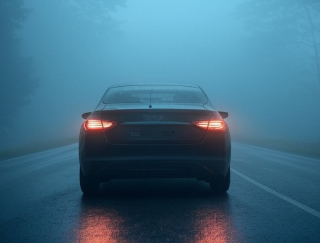
- Front and rear fog lights, along with dipped headlights.
- Front and rear fog lights, along with side lights.
- Front and rear fog lights, along with hazard warning lights.
- Front and rear fog lights, along with main beam lights.
Explanation: When driving in dense fog, you should switch on your front and rear fog lights, along with dipped headlights. You should not drive in fog with main beam headlights on.
+When driving on a cobblestone road, why should you take extra care?
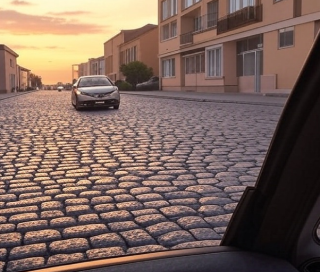
- The road surface is uneven, and road grip varies.
- The smoothness of the cobblestones helps to improve grip.
- The gaps between the stones help road holding, and grip is improved.
- The road surface is particularly even, and tyre grip is improved.
Explanation: Different road surfaces can affect your vehicle's grip on the road and its stopping distances. You should be aware of this when driving on different surfaces.
+After a heavy downpour, why should a driver keep a greater distance from the vehicle in front?
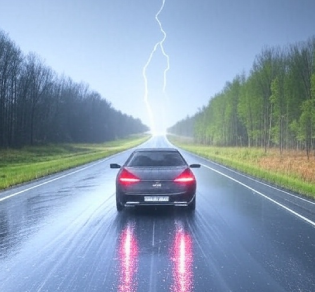
- Because wheel spray may impair visibility.
- Because required stopping distances are decreased.
- Because wheels rotate at a greater speed after rain.
- Because wheels rotate at a slower speed after rain.
Explanation: Heavy rain can affect how well you can see and how well you can be seen by other road users. Because of that, you should slow down in heavy rain and keep a greater distance from the vehicle in front.
All car questions on poor visibility & weather · Other car topics · Car mock theory test